
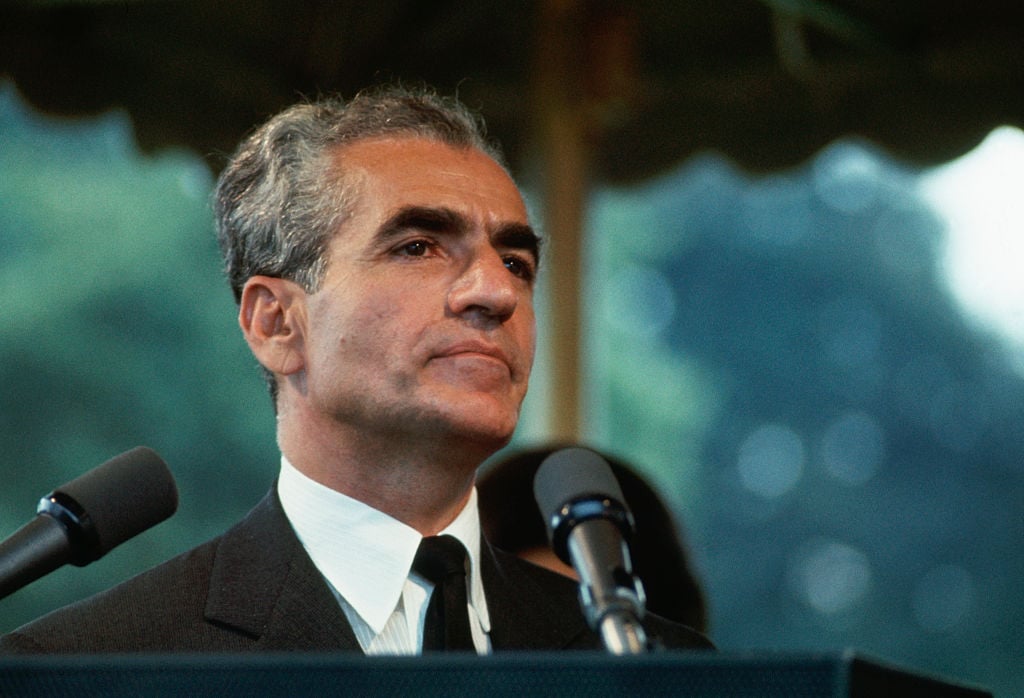
Mohammad Reza Pahlavi, one of the last kings of Iran, had an estimated net worth of around $2 billion at his peak. His wealth is not just a number; it reflects a complex time in history.
Pahlavi accumulated his fortune through various means, particularly oil revenues. During his reign, Iran saw a massive economic boom thanks to oil exports, greatly boosting his personal wealth.
The lifestyle he led was extravagant, with luxury palaces, expensive cars, and lavish parties. This opulence, however, was often at odds with the struggles of ordinary Iranians.
Understanding Pahlavi’s financial legacy helps shed light on the broader social and political issues in Iran today. His wealth and how it was acquired play a significant role in the public’s memory of his reign.
In exploring these themes, we gain a deeper understanding of the impacts that wealth and power can have on a nation and its people.
What Was Mohammad Reza Pahlavi’s Net Worth?
Mohammad Reza Pahlavi, the last Shah of Iran, had an estimated net worth of around $2 billion at the time of his death in 1980. When adjusted for inflation, this amount is roughly equivalent to about $7.2 billion today.
Some historical accounts suggest that his personal fortune could have been over $1 billion of any leader of a country during the 1900s. In broader estimates, the entire Pahlavi family fortune including assets not just belonging to him might exceed $20 billion.
A significant part of his wealth came from vast oil revenues during his reign. The Shah also controlled the Pahlavi Foundation, which had investments in banks, insurance companies, industries, and real estate.
Additionally, he owned foreign assets, including properties and bank accounts in places like Switzerland. However, many details about his finances were not transparent, leaving room for speculation. While some sources estimate his lifetime wealth to be as low as $500 million, most estimates range between $1 billion and $2 billion as of 1980.
Oil Income
In the 1950s, Iran’s oil production quickly grew after a significant consortium deal with foreign companies. This collaboration allowed Iran to ramp up its oil exports, increasing from about 635,000 barrels per day to a peak of 6 million barrels per day by the early 1970s.
During the late 1950s, Iran earned around $300 to $400 million annually from oil revenues. By the late 1960s, this figure had surged to between $900 million and $1 billion. In 1972, before a major oil price hike, revenues reached $2 billion, jumping to $5.6 billion in 1973, amid the oil crisis that saw prices quadruple.
Oil became the backbone of Iran’s economy during this period, providing over 50% of the profits from oil exports. Despite the enormous wealth generated, much of this revenue was spent on military expenses and imports, raising concerns that it didn’t significantly improve public welfare. The National Iranian Oil Company (NIOC) was the main source of revenue, paying ($12 M in one-month 1962) substantial dividends into accounts controlled by Shah Mohammad Reza Pahlavi.
Under the consortium agreements, Iran’s share of oil profits improved to around 50% or more, although reports indicated there were discrepancies in unaccounted oil receipts, believed to reach around $2 billion per year. Eventually, after 1954, Iran gained more control over its oil resources, leading to full ownership in 1973.
The Shah of Iran’s Personal Wealth
At the time of his death in 1980, the Shah’s estimated net worth was around $2 billion, which, when adjusted for inflation, is equivalent to approximately $7.2 billion today. A significant portion of his wealth, about $4 billion, was taken abroad by the Shah and his family when they fled Iran, indicative of the turbulent political climate that led to their departure.
Analyzing the Shah’s financial landscape reveals just how extensive his control was. He personally managed about $1 billion, largely in Swiss bank accounts, while estimates suggest that the total Pahlavi family fortune might exceed $20 billion. For instance, in just one month in 1962, the Shah received $12 million in dividends from the National Iranian Oil Company, which today would represent about $117 million. This highlights how oil played a crucial role in his financial empire.
He had major stakes in numerous powerful companies, including a significant 80% share in Iran’s largest insurance company and around 70% of hotel rooms in the country. When we look at records from as early as 1958, the valuation of his companies was pegged at around $157 million, with additional savings outside Iran amounting to $100 million.
While he reported a personal net worth of $2 billion, the actual assets tied to his foundations and family were likely far greater, peaking at around $3 billion. This discrepancy demonstrates the multifaceted nature of wealth during his rule, making it hard to truly capture the extent of his financial power.
Early Life and Education
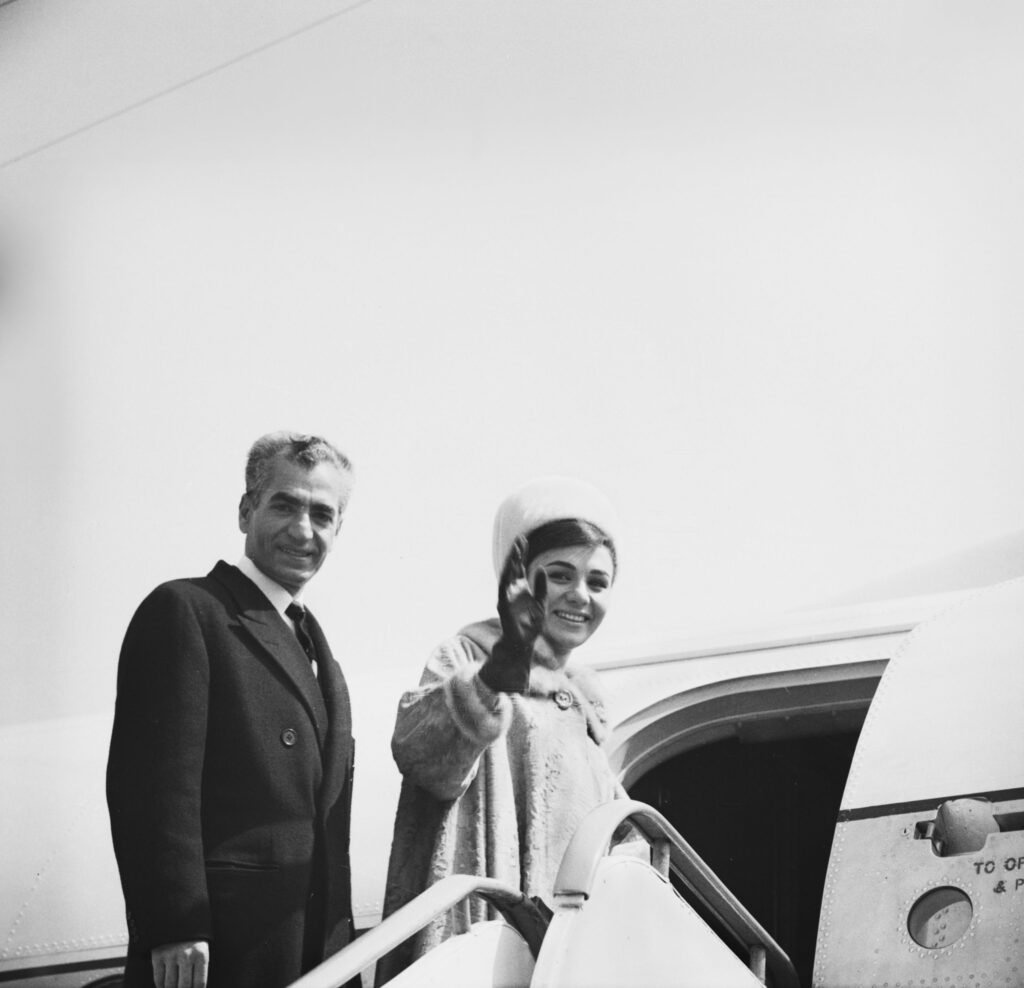
Mohammad Reza Pahlavi was born on October 26, 1919, in Tehran, Iran. He was the son of Reza Shah Pahlavi and Taj ol-Molouk and had a twin sister named Ashraf. In 1925, when his father became king and started the Pahlavi dynasty, Mohammad Reza was given the title of Crown Prince. His upbringing was within the royal court, where he began to learn about leadership and governance.
Between 1931 and 1936, he was sent to Switzerland for his education at the famous Institute Le Rosey. At about 11 years old, he started learning in a French-speaking environment, which helped him gain skills in European studies and develop discipline through sports like football and skiing. This period also exposed him to Western culture and the world of diplomacy.
After returning to Iran in 1936, he completed his education and entered the Military Academy in Tehran. There, he underwent military training and eventually became a commissioned officer.On September 16, 1941, at just 21 years old, he ascended to the throne as Shah of Iran after his father was forced to abdicate due to the Anglo-Soviet occupation. This marked the beginning of a new chapter in his life and the history of Iran.
Ascension to the Throne
On September 16, 1941, a significant event unfolded in Iran: the young Mohammad Reza Pahlavi became the Shah. He ascended the throne after his father, Reza Shah Pahlavi, resigned due to pressure from the Allied powers.
The Allied forces, comprised of Britain and the Soviet Union, occupied Iran during World War II, which ultimately forced Reza Shah into exile. This situation created a power vacuum that led to Mohammad Reza’s unexpected rise. His accession was officially announced during a session of Parliament, marking the start of his rule. The following day, he took the oath of office, committing himself to the nation.
The public response was largely positive, with crowds welcoming him in the streets, filled with hope for the future. Interestingly, the Allies initially considered a claimant from the Qajar dynasty but ultimately accepted Mohammad Reza as the new Shah.
At just 21 years old, born in 1919, he was one of the youngest leaders in the world at that time. The political pressure of World War II played a crucial role in shaping this moment in history.
Reign as Shah in the 1950s and 1960s
In the 1950s, Mohammad Reza Pahlavi ruled Iran during a time of great turmoil and change. When Prime Minister Mohammad Mosaddegh nationalized the Anglo-Iranian Oil Company in 1951, it sparked an oil crisis. The British imposed an embargo, leading to a collapse in oil exports and economic instability marked by inflation.
A power struggle ensued between the Shah and Mosaddegh, culminating in the 1953 coup known as Operation Ajax. With the help of the CIA and British MI6, the Shah was temporarily exiled to Rome before being restored to power, allowing him to expand his royal authority.
Between 1954 and 1959, the government solidified its hold, entering into an oil consortium with foreign companies. This deal helped boost Iran’s revenue and reduced parliamentary influence, as the Shah’s power grew alongside the newly established SAVAK, which monitored political dissent.
By the early 1960s, economic pressures mounted, prompting the Kennedy administration to push for reforms. In 1963, the Shah launched the White Revolution, which aimed to modernize the country with land reforms and women’s suffrage.
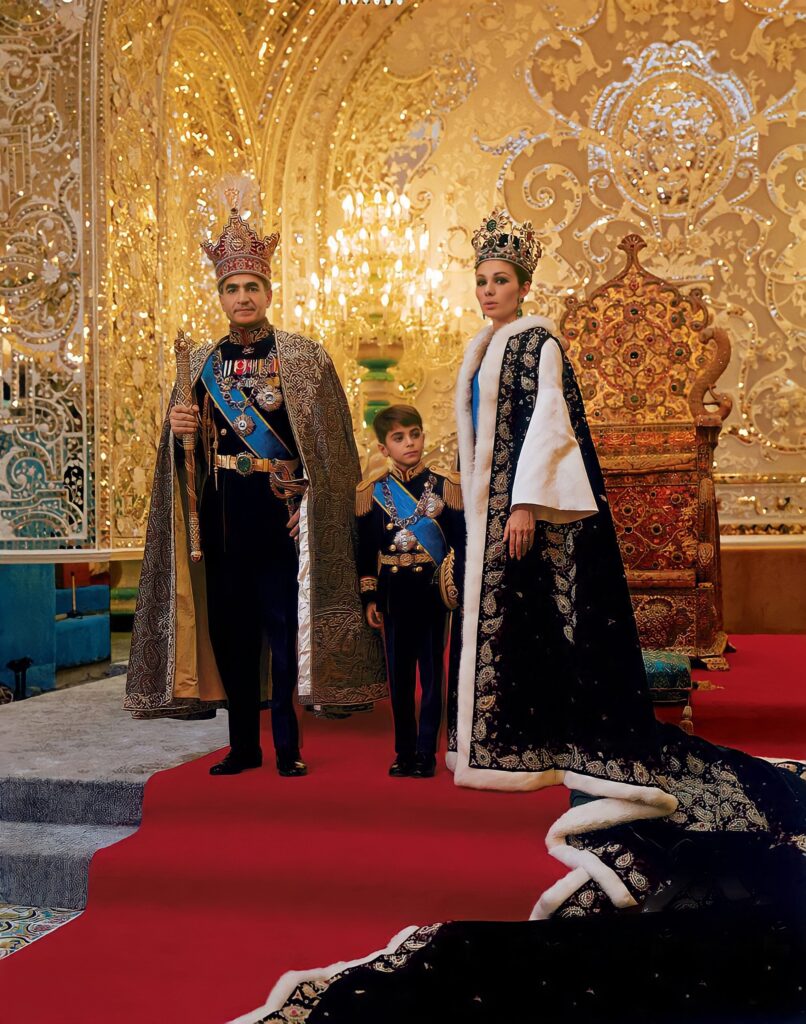
Throughout the 1960s, social programs focused on education and healthcare gained traction. However, religious opposition led by Ruhollah Khomeini grew stronger, culminating in his arrest during the 1963 uprising. Despite military expansion and growing authority, the Shah’s rule faced increasing resistance as the decade progressed. In 1967, he was crowned Shahanshah, or “King of Kings,” as he aimed to assert regional power.
Reign as Shah in the 1970s
During the 1970s, the Shah of Iran saw a significant increase in oil revenues, leading to a booming economy. With this wealth, the government invested heavily in infrastructure and industry, hoping to modernize the country. However, this rapid growth brought rising inflation, causing complaints about the rising cost of living for ordinary citizens.
In 1975, the Shah declared Iran a one-party state, forming the Rastakhiz (Resurgence) Party to consolidate his power. The political landscape became highly centralized, with authority resting firmly in the hands of the Shah. Meanwhile, the secret police, known as SAVAK, increased their surveillance and repression of dissent, which raised concerns about corruption among the elite.
Socially, Iran underwent rapid urbanization as many people left rural areas for cities. Western influences became prominent, evident in consumer culture and fashion trends. The growth of the middle class led to more professional job opportunities, along with increased access to education and literacy. Women began to take on more significant roles in education and the workforce.
Despite these developments, discontent grew among various groups, including the clergy, merchants, and students. Protests erupted in 1978, culminating in violent clashes like the infamous Black Friday, where the army turned against protesters. Amid rising tensions, opposition leader Ruhollah Khomeini gained support. By January 16, 1979, the Shah fled Iran, leading to the end of the monarchy and the declaration of the Islamic Republic in April.
Personal Life
The Pahlavi family had deep roots in the Shia Muslim faith. They often expressed their beliefs through writings and prayers, which shaped their lives and values. Reza Shah had several children, including Ashraf, Shams, and Ali Reza, creating a close-knit family atmosphere.
Reza Pahlavi, the eldest son, was born on October 31, 1960. He was designated as the crown prince during his father’s coronation in 1967. His siblings included Shahnaz, from his father’s first marriage, as well as Farahnaz, Alireza, and Leila, who are from his mother, Empress Farah. The family maintained strong bonds, particularly between Reza and his sister Ashraf.
In 1979, following the Iranian Revolution, the family was forced to leave Iran, living in various countries, including Egypt and the United States. During this time, Reza Pahlavi became an advocate for democracy and change in Iran.
He pursued education in the U.S., with a degree in political science, while balancing his royal heritage. Reza married Yasmine Etemad‑Amini, and they have three daughters together. Throughout his life, he has stayed connected to his cultural and religious roots, emphasizing the importance of faith and community.
Death
In January 1979, amidst the turmoil of the Iranian Revolution, he left Iran and began a journey that took him through several countries, including Egypt, Morocco, the Bahamas, and Mexico. After being granted asylum in Egypt by President Anwar Sadat, he traveled to the U.S. on October 22, 1979, seeking treatment for lymphoma, a type of cancer he was battling. Sadly, he passed away in Cairo, Egypt, on July 27, 1980, at the age of 60. His journey was marked by both hope and struggle in the face of illness and political upheaval.
Conclusion
Mohammad Reza Pahlavi’s net worth of $2 billion highlights his significant influence and wealth during his reign in Iran. His fortune was built on a combination of oil revenues, business investments, and political power. While he enjoyed a lavish lifestyle, his wealth also came with challenges and controversies, reflecting the complexities of his time as a monarch. Understanding his financial legacy gives us a clearer picture of the socio-political dynamics in Iran. As we explore history, let’s remember the important lessons learned from leaders like Pahlavi.
FAQs
Who was Mohammad Reza Pahlavi?
Mohammad Reza Pahlavi was the last Shah of Iran, ruling from 1941 until the 1979 Iranian Revolution, which led to his exile.
How much was Mohammad Reza Pahlavi’s net worth?
His net worth is estimated to be around $2 billion at the time of his reign, mostly from his investments and oil revenues.
What did Mohammad Reza Pahlavi do for Iran
He implemented modern reforms, including improving education, women’s rights, and industrial development, but faced criticism for his authoritarian rule.
Why did he leave Iran?
He fled Iran during the 1979 revolution due to mass protests against his regime and the growing influence of religious leaders.